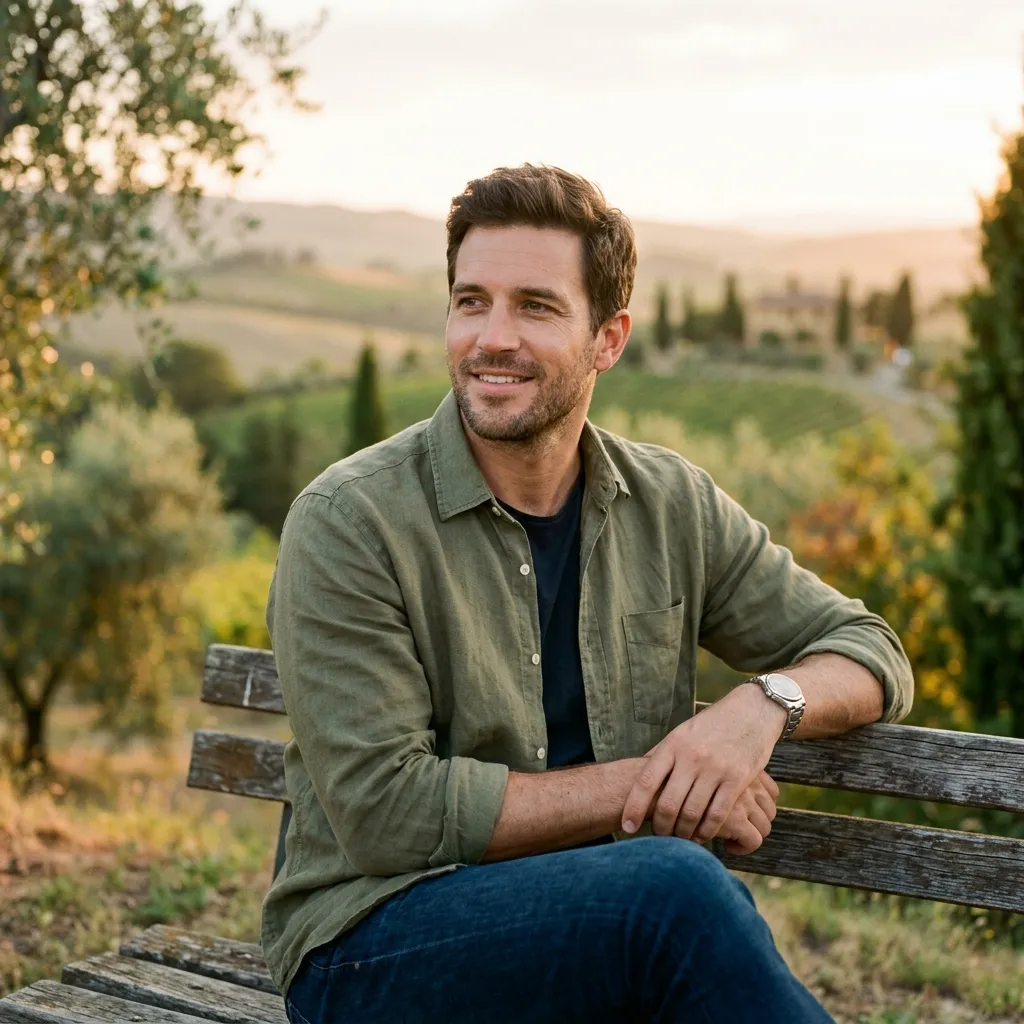
Here's the fact that gets repeated in every photo-review thread until people are sick of it, because it keeps being true: on swipe-based apps, a huge share of right-swipe decisions are made on the first photo alone, in 1–2 seconds.
Face-perception research says a first impression of a face forms in about 0.1 seconds. Which means your dating profile pictures aren't "six photos where the first one matters most" — the first photo is effectively your entire profile. It decides whether anyone opens the other five, and whether anyone reads your bio.
This guide covers three things: the hard standards for a lead photo, how each app crops and counts photos, and what to do if you don't have a single usable shot.
The 8 Hard Standards for a First Photo
Photo-review communities across platforms and age groups have converged on this checklist:
| Standard | Requirement | Why it matters |
|---|---|---|
| Solo | Only you — no friends, no pets in frame | Group openers force "guess who," most people just skip |
| Face size | Face fills 1/3 to 1/2 of the frame | Too far reads unclear, too close feels intense |
| Eyes | Looking directly at the camera | Eye contact builds trust; sunglasses on a lead photo is fatal |
| Light | Natural light (window / outdoor golden hour) | Overhead and fluorescent light cast shadows; backlight ruins the shot |
| Expression | Genuine smile (a Duchenne smile, eyes included) | Smiling photos consistently outperform serious ones |
| Sharpness | High resolution, face in crisp focus | Blur = low-effort signal |
| Recency | Within the last 12 months | The expectation gap from old photos can't be talked away |
| Background | Clean, neutral, or mildly interesting | Cluttered backgrounds steal attention and add mental load |
One borderline expression deserves a mention: the serious/confident face can work, but only as one photo inside the lineup, never as the sole opener — it occasionally lands for men, and for women it reliably reads as unapproachable. When in doubt, smile.
The Five Fastest Ways to Get Left-Swiped
From the eternal Reddit threads asking "what makes you instantly swipe left," the five most-nominated categories:
- A gallery of bathroom/car selfies — "looks like he has no life and no friends"
- Opening with a group photo — "nobody wants to play detective"
- Filters so heavy you look like a different person — "the first date becomes a reveal"
- Photos from years ago — "if your photo needs a disclaimer, it needs a reshoot"
- The humblebrag props — posing with a fish you caught, a rented sports car, or a bottle service table
The common thread: all five broadcast "low effort" or "untrustworthy," and in a swipe context users have zero tolerance for either.
First Photo Specs for Every App
The three major apps treat photos differently, and the same upload can get half your face cropped off on one of them:
| Platform | Photo limit | How the first photo displays | Crop warning |
|---|---|---|---|
| Tinder | 9 | Vertical card stack, swiping starts at photo one | Keep key elements away from edges — the top gets cropped |
| Hinge | 6 | Full-screen vertical, supports photo captions | Around 6:9 vertical is the safest framing |
| Bumble | 6 | Mostly square crop | Circular avatar thumbnail — face dead center, always |
Two practical takeaways:
- Vertical beats horizontal. Every feed is a vertical card stack; a landscape photo gets trimmed to a center sliver.
- Face in the upper-center of the frame. Square crops and circular thumbnails both eat the edges.
Preview the thumbnail in-app before you finalize — plenty of photos look great full-size and turn into a smear at 60 pixels wide, and the thumbnail is what users see first.
After the First Photo: The 4–6 Photo Lineup
The opener wins the tap; the lineup wins the like. The recommended order:
| Slot | Content | Job |
|---|---|---|
| Photo 1 | Sharp solo close-up | Earn the tap |
| Photo 2 | Natural full-body shot | Show the whole picture honestly, build trust |
| Photo 3 | Hobby / activity shot | Hand people a conversation opener |
| Photo 4 | Social shot | Prove a normal social life |
| Photo 5 | Polished shot, different look | Show another side of you |
| Photo 6 | (Optional) funny / personal meme photo | Closer — never the opener |
More is not better: 1–2 photos reads as defensive or incomplete, and 7–9 only makes sense if every single one is strong. Filler photos drag down the whole set.
No Usable Photos? You Have Three Options
This is where most people actually live: a camera roll full of mirror selfies and group shots, nothing that meets the standards above. Three paths:
Option A: a friend with a phone. Cheapest, quality depends entirely on luck. The catch is that friends don't understand the visual grammar of swiping — a good dating lead photo and a good life photo are two different genres.
Option B: hire a dating photographer. Specialists charge roughly $200–500 for a session, turnaround is 1–2 weeks, and you get 20–40 images. Highest quality ceiling, highest barrier.
Option C: AI photos. Generate professionally lit, clean-background lead shots from selfies you already have. Match Group and Kinsey Institute data from 2026 shows nearly 40% of American singles have used AI to help with their dating image, and among Gen Z it's 67% — this is not a gray-area hack anymore, it's mainstream behavior.
How the three options actually compare:
| Dimension | Friend shoots you | Photographer | AI photos (RadiantSnaps and similar) |
|---|---|---|---|
| Cost | A dinner | $200–500 | Free trial, plans about $29–$39 |
| Turnaround | Whenever they're free | 1–2 weeks | Under two hours |
| Scene variety | Low | Medium | High (studio / outdoor / café generated in one batch) |
| Looks like you | Yes, maybe unflattering | Yes | Depends on the tool — see the red lines below |
The one real risk on the AI route is "the generated person doesn't look like me." There's exactly one test for choosing a tool: a friend who knows you should recognize you instantly. RadiantSnaps builds its photos on your real selfies, keeps your facial features, and only upgrades lighting and background, with exports pre-cropped for Tinder, Hinge, and Bumble. Start with one free photo on the generate page, then decide about the full set.
Lighting: The Cheapest Upgrade That Exists
Of all the standards above, "natural light" is the lowest barrier and the biggest jump. Worth its own section:
- Window light is a free studio. Stand facing the window so light hits your face head-on or from 45 degrees. Skin instantly looks even and dimensional. Back to the window = backlit = delete it.
- Golden hour (the hour after sunrise or before sunset) adds warmth that flatters almost every skin tone.
- Avoid noon overhead sun — the hard shadows under the eyes and nose are the number one reason photos read "angry."
- Wipe your lens. Fingerprints on a phone camera put a haze over the entire photo and soften contrast. A 3-second fix that is criminally underrated.
- Arm's length, 1x zoom. The front camera's wide angle up close warps your nose and face shape — a big part of why "I don't photograph well" is often just physics.
The Selfie Rescue Workflow
If mirror selfies are all you've got, run this sequence:
- Pick one: a natural-expression, front-facing selfie without obvious distortion — bad lighting is fine, we'll fix that
- Fill the gaps: dig up one usable hobby photo and one social photo; if none exist, book a shoot or generate them
- Level the quality: replace the single worst photo — your set is judged by its weakest link
- Reorder per platform: close-up leads on Tinder, story-driven photos go early on Hinge, keep Bumble clean overall
- Thumbnail check: shrink everything to list-thumbnail size and confirm every face is readable
Step 2 is where most people stall. If you can't produce scene variety yourself, AI generation is the practical answer: tools like RadiantSnaps generate café, outdoor, and studio scenes from your real selfies while keeping your face yours, and export in each platform's crop format. Test one photo on the generate page for free — if it fails the friend blind test, you've lost nothing but ten minutes.
Final Checks Before You Hit Upload
- Is your face readable in the thumbnail? (Shrink it to fingernail size and look again)
- Any group shots, sunglasses, or old photos in the first two slots?
- Are all six backgrounds the same room?
- Does each photo, viewed alone, look like "a person with a life"?
After swapping the first photo, watch the numbers for at least a week — weekday and weekend data behave very differently. If matches still don't come, run the full funnel audit in our zero-matches diagnosis guide.
Frequently Asked Questions
- Should the first photo be a close-up or a full-body shot?
- Close-up. The face clarity of the lead photo is the strongest single variable in swipe conversion; put the full-body shot second to build trust.
- Smile or serious face?
- When in doubt, smile. A genuine smile (the kind that reaches the eyes) reads warm and approachable; the serious face only works as one card in the lineup, and it's more forgiving for men than for women.
- Can I use an AI-generated photo as my first photo?
- Yes, as long as it looks like you. What platforms prohibit is misrepresentation, not AI enhancement. AI photos that keep your real features and only improve lighting and background are fully compliant and pass Tinder's photo verification.
- How often should I replace my first photo?
- Refresh it within every 12 months at minimum, and immediately after any visible change — haircut, glasses, weight. Long-time users also fatigue on your photos, so rotating the lineup every 3–4 months helps hold your match rate.
- Are group photos completely off-limits?
- No, but they go in slots 3–5, and it must be instantly obvious which one is you. A group photo as the opener hands every swiper a puzzle instead of a person.
- Do pet photos make a good first photo?
- Dog photos generally read "warm, responsible" and are great material — but you have to be the main subject. A lead photo where the pet is alone communicates "the owner may not be present."
- The expression is great but the lighting is bad — can I use it?
- Reshoot rather than rescue. Backlit and overhead-lit photos lose more points in swiping than a good expression gains. Easier path: feed that same selfie into the [generate page](/generate) and regenerate the set with correct lighting.