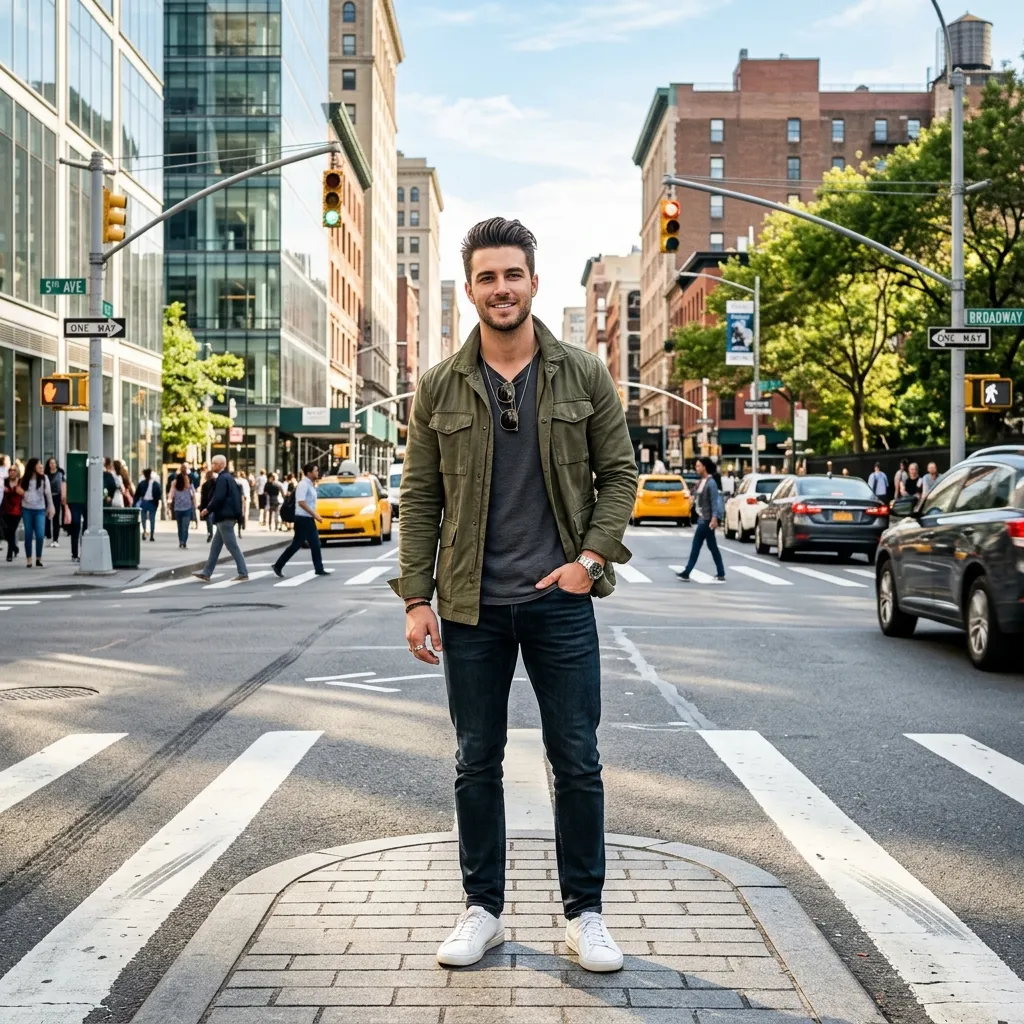
"The same six photos do fine on Hinge and go completely dead on Tinder." That's not in your head. The three platforms are built on different mechanics, and they read the same photo completely differently. Copy-pasting one set across every app remains one of the most common profile mistakes in 2026.
The short answer first, then the platform-by-platform breakdown:
| Your goal | Best platform | Where the photo effort goes |
|---|---|---|
| Volume, meeting lots of people fast | Tinder | A dominant first photo; the rest covers variety |
| Serious relationships, real conversations | Hinge | Every photo should offer something to comment on, alongside prompts |
| A women-first experience | Bumble | Clean, respectful, clearly put-together lifestyle signals |
Why One Strategy Can't Serve Three Apps
The core mechanics differ in ways that change what "a good photo" even means:
| Dimension | Tinder | Hinge | Bumble |
|---|---|---|---|
| Match logic | Pure swiping; mutual right-swipes match | Likes and comments on specific photos/prompts | Women message first (24-hour window) |
| Photo limit | 9 | 6 | 6 |
| Weight of text | Low (bio optional) | High (3 required prompts) | Medium |
| User base | Largest, widest coverage | Medium, strongest in cities | Medium |
| Community reputation | "Match graveyard": matches yes, conversations no | "Designed to be deleted": best conversation quality | Less harassment for women, harder matching for men |
The consistent conclusion from years of r/OnlineDating and r/SwipeHelper observation: on Tinder, almost everything rides on the first photo; on Hinge, everything rides on what story the full set tells together.
Tinder: The First Photo Is Everything
Tinder is a fast, purely visual decision environment. Every number about swipe behavior gets amplified here: decisions land in 1–2 seconds, and most users are gone after photo one.
Photo strategy:
- The lead photo must work as a thumbnail: sharp solo close-up, natural light, genuine smile
- The remaining eight solve two problems: variety (five different scenes beat five near-identical selfies) and honesty (one truthful full-body shot)
- Group photos, sunglasses, and old shots have zero margin for error here, because nobody opens your profile to investigate
The other side of Tinder: it has the highest scam and bot density of the three, so users are instinctively wary of anything "too perfect." On Tinder specifically, over-polishing actively costs you likes — the target is "a real person having a good day," not a lookbook.
Hinge: Photos Are Conversation Fodder
Hinge's mechanic is liking or commenting on a specific photo or prompt, which turns every photo into a potential conversation door. That changes the evaluation criteria: a photo isn't just judged on looks, it's judged on how much there is to say about it.
Photo strategy:
- The lead still needs to be sharp, but photos 2–6 should deliberately plant hooks: a trail photo invites "which hike is that?", a home-cook photo invites "what's the dish?", a dog photo is a built-in opener
- Photos and the 3 prompts should complement, not repeat — photos show your life, prompts show your personality
- The universal Reddit complaint is prompt-writing anxiety ("I spend more time on prompts than on actual dates") — nobody complains that photos give them too little to comment on, because good photo hooks lower the cost of starting a conversation
Bumble: Clean Signals and Approachability
Bumble's differentiator is women messaging first, which shapes both its user base and its vibe. When women swipe, they're filtering out not just "not attractive" but "potentially exhausting."
Photo strategy:
- Cut every aggressive or try-hard signal: flexing gym poses, alcohol-soaked scenes, weird-angle selfies
- Make the lifestyle legible: one sports photo, one dressed-up photo, one hobby photo beats six dim bedroom selfies every time
- Smile plus eye contact on the lead photo carries more weight here than on the other two apps, because "approachable" directly drives whether a woman opens the conversation
Quick Specs Side by Side
| Spec | Tinder | Hinge | Bumble |
|---|---|---|---|
| Recommended count | 5–9 | All 6 | 4–6 |
| Lead photo framing | Vertical close-up | 6:9 vertical | Square crop, face centered |
| Group photo tolerance | Low | Medium (later slots) | Low |
| Value of activity photos | Decorative | Conversation doors | Lifestyle proof |
| Video | None | Video prompts / polls supported | Dedicated video slots |
Which Platform Fits Which Player
There's no universal answer, but these combinations are well-tested by community:
| Player | Main platform | Why |
|---|---|---|
| City dweller seeking a relationship | Hinge | Prompts filter out time-wasters, conversation quality is highest |
| New in town / wants volume | Tinder | Biggest base, fastest cold start |
| Women | Bumble | Women-first filtering cuts most low-effort messages |
| Small town / thin local pool | Tinder | Hinge and Bumble run dry in small pools within weeks |
| Want to meet within 30 days | Bumble | The 24-hour window pressures both sides to move |
| Hates interrogation-style small talk | Hinge | Photos and prompts supply the topics for you |
Paid Features Won't Fix Your Photos
All three monetize around exposure and filters, and none of them fix a photo problem. Here's where the money actually goes:
| Paid feature | Tinder | Hinge | Bumble |
|---|---|---|---|
| See who liked you | Gold/Platinum | Standouts (roses) | Premium |
| Boost exposure | Boost / Super Boost | Roses (for Standouts) | Spotlight |
| Unlimited likes | Plus and up | Not a thing | Not a thing |
| Priority messages | Platinum | — | — |
One structural fact to internalize: boosts are amplifiers. Good photos amplify opportunity; bad photos amplify failure. The Reddit horror stories ("I spent $400 over six months for twelve matches") are almost always a payment-before-photos ordering problem. The correct order never changes: photos → profile → behavior → and only then money.
That's also why we suggest spending the budget in reverse: instead of paying a monthly boost tax, spend once on photo assets — a photographer session, or a generated multi-scene set from RadiantSnaps (free trial on the generate page). Photo assets compound every month; a boost expires in 30 minutes.
One Photo Set, Three Platforms: The Practical Workflow
Shooting a separate set per app isn't realistic. What works is one high-variety set, reordered per platform:
- The core asset is variety: sharp close-up, full-body, outdoor activity, indoor lifestyle, social scene — at least one of each
- Tinder order: close-up leads, variety follows, cut anything that needs a caption to explain
- Hinge order: close-up leads, your most story-rich activity shots go 2nd and 3rd to bait comments
- Bumble order: smiling close-up leads, one dressed-up and one athletic shot, the whole set tightened toward "clean and has their life together"
If you don't have that material, AI photos are currently the cheapest way to get it. Take RadiantSnaps as the example: upload your selfies once, generate studio, café, outdoor, and social scenes, and export pre-cropped for each platform — distributing one set across three apps takes minutes. Grab a free photo on the generate page, confirm it passes the friend blind test (the same standard Reddit communities recommend), then run the full set.
The Numbers Behind the Choice
For a little scale context:
- Tinder operates in 190 countries with 55 billion+ cumulative matches — still the largest pool on earth
- Pew Research: more than half of Americans aged 18–29 have used a dating app; all three platforms compete for exactly this group
- Match Group / Kinsey 2026 data: nearly 40% of American singles have used AI on their dating image — on all three platforms, AI-optimized photos are spreading fast, and your competition is already using them
Frequently Asked Questions
- Can I use the exact same photos on all three platforms?
- The source set can be identical, but the order must not be. Tinder leads with impact, Hinge needs a story after the opener, Bumble wants the set tightened up. Copying the order unchanged is the most common waste.
- If I only pick one app, which?
- Hinge for relationships, Tinder for volume, Bumble for women or anyone tired of low-effort floods. All three work in big cities; in smaller towns, pick the largest pool — Tinder.
- What matters more on Hinge, photos or prompts?
- Photos decide your open rate, prompts decide your comment rate — photos come first in the funnel. But Hinge is special: one photo with a story built in can do half a prompt's job.
- Will "too good" photos make people think I'm fake on Tinder?
- Photos that are "perfect but not real" will — lookbook-grade retouching triggers suspicion in a scam-dense environment. The bar is "you on a good Tuesday," not a magazine page.
- Do I need new photos when I switch platforms?
- No — just reorder and recrop. Tools with multi-format export (like [RadiantSnaps](/generate)) generate once and serve all three apps directly.
- Which platform has the best odds for men?
- On the data, Tinder is the most brutal competition for men (the exposure asymmetry), while Hinge produces the highest conversation quality. For serious goals, the community-tested combo is Tinder as a supplementary stream and Hinge as the main front.